
CASE STUDY / SEMICONDUCTOR EQUIPMENT MODERNIZATION
A Second Life for Critical Ingot Band Saws.
A silicon wafer manufacturer needed to keep aging machines in production despite obsolete drives, difficult-to-source spares, and recurring breakdowns. The solution was a focused controls and motion upgrade, not a new machine.
Details are drawn from the originally published project account. Display resolution is not a statement of absolute measurement accuracy.
01 / THE CUSTOMER'S CHALLENGE
When Critical Spares Became the Weak Link.
For this wafer manufacturer, ingot band saws were an essential part of the production process. Worn components and repeated failures were increasing downtime, while support for the original control hardware was becoming harder to obtain.
The machine builder's reported lead time for some replacement parts had grown to two or three years. Replacing the saws outright would require capital investment and changes to an established production flow.
The customer needed a practical path to extend machine service life without rebuilding the entire operation around new equipment.
02 / THE ENGINEERING DECISION
Keep the Machine. Modernize What Controls It.
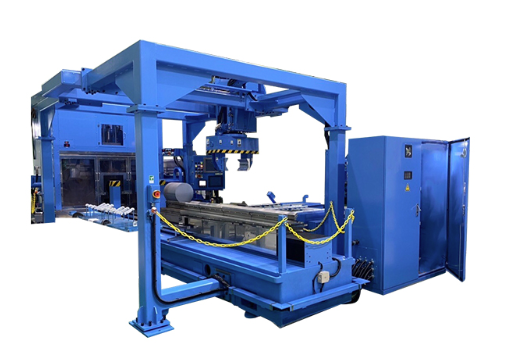
Rather than replace the whole band saw, Automation Solutions developed a targeted retrofit around the components that had become unreliable or obsolete.
Current-generation motion hardware
Replace the legacy servo controllers, servo motors, and variable-frequency drives with supported alternatives that are easier to maintain and source.
Clearer blade-angle feedback
Investigate inaccurate blade-slant readouts that varied between machines. Use the replacement servo amplifiers to support a revised monitor displaying the angle to three decimal places.
Production-aware commissioning
Break the renewal work into multiple installation windows instead of taking the full group of machines out of service for one large project.
03 / CUSTOMER OUTCOME
More Useful Life From Existing Equipment.
The retrofit let the manufacturer retain its established machines while replacing vulnerable control components. The original account reports improved blade-angle visibility, fewer rejections, and less dependence on long-lead legacy spares. Staging the installations helped limit the effect of the upgrades on production.
Serviceable controls
Current-generation servos and drives provided a more practical path to future parts and maintenance.
Better process visibility
A revised blade-angle display addressed an existing inconsistency and supported more repeatable setup.
Avoided full replacement
Modernization preserved the existing equipment and reduced the disruption of replacing the complete machines.
04 / NEXT STEP
What Needs to Keep Running?
If an aging machine is held back by obsolete controls, unpredictable spares, or process limitations, tell us what you are working through. We can discuss the engineering options and appropriate next steps.
See More Engineering Case Studies →